What Happens When Young People Lead Culture in Huddersfield
A space for conversation, creativity and critical thinking During the February half term, MakerWorld in Huddersfield became a space for…
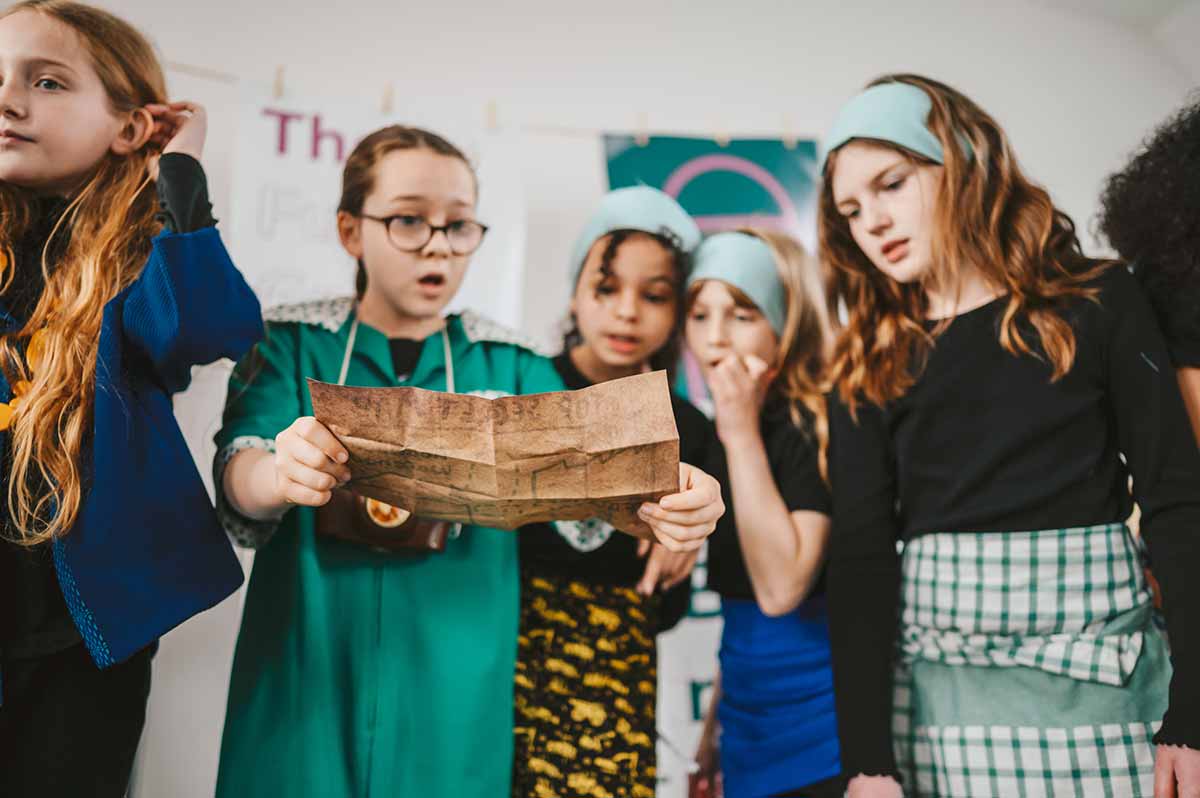
Blog written by Dr Lisa Stephenson Story Makers Conference 2024/25 in collaboration with Chol Theatre. Friday 7th February, 12-30-5.30 What does it mean to Rewild the Curriculum? The future is…
Blog written by Dr Lisa Stephenson
Story Makers Conference 2024/25 in collaboration with Chol Theatre.
Friday 7th February, 12-30-5.30
“The future, by definition, is unpredictable; but by being attuned to some of the trends now sweeping across the world we can learn – and help our children learn – to adapt to, thrive in, and even shape whatever the future holds. Students need support in developing not only knowledge and skills but also attitudes and values that can guide them toward ethical and responsible actions. At the same time, they need opportunities to develop their creative ingenuity to help propel humanity towards a bright future” (OECD, 2020)
What does it mean to Rewild the Curriculum?
The future is unpredictable, and our world is changing rapidly- schools and educational policy must respond accordingly to equip children with the skills, knowledge, and dispositions to flourish. Mental health is a critical issue globally, with young people one of the most affected groups. The opening OECD policy quote to this conference blog was used to frame our Story Makers Conference in 2023 which took place in the North of England at Leeds Beckett University, in collaboration with the OECD Futures of Education. We brought together a range of stakeholders: international artist educators, teachers, senior leaders, and young people to explore the following questions because curriculum change must come from both policy and practice:
Our participatory conference was opened by young people from the British Youth Council – amplifying their voices for curriculum change. We wanted to make sure that their experiences of education had a central place in a conference taking action on curriculum. Drawing from their policy motion 22 which argues for a renewed Curriculum for Life (2022)- their call to action articulated the need for a greater curriculum emphasis on relationships, mental health, sustainability, cultural awareness, and social-emotional learning, rather than just knowledge for examinations. Their manifesto for curriculum change calls for urgent action on “an education that has for too long been about exam preparation and not about real-life support for our future” stating that “the education system is failing us.”
As educators, the term ‘rewilding’ refers to rebuilding education in response to young people’s call to action and asks us to consider what we are bringing back into the curriculum and why. This metaphor was used as a shared language to frame our collective thinking.
Relational learning needs to be felt and not taught.
In response to gaps in practice, policy and research in creative pedagogies, our conferences and knowledge exchange explicitly aim to shine a light on the longitudinal work of teachers, artists, and young people who are addressing these complex questions through their creative practices. Whilst all areas of learning can be approached through creative learning, drama, play, story, and the expressive arts activate emotion in action. They are rich creative pedagogies for relational learning. Story work offers an imaginative rehearsal for life. It can connect all curriculum areas (such as literacy, PHSE, and humanities). Within a rounded curriculum and in response to global challenges, there is a desperate need to value and cultivate collaborative as well as individual learning approaches. Arts and humanities support young people to express in ways which cannot always be put into words (Brody, 2022). We will share the practicalities of co-designing, embedding a sustaining story, and drama-based pedagogy within the curriculum by sharing insights and practices from teachers and artists across multiple projects. These insights will be shared through participation and knowledge exchange.
“Creativity can be utilised across all areas of learning, the expressive arts, however, operate using a unique set of pedagogical principles which value and activate children’s participation, emotional sensibilities and cultural references as rich learning resources. As educators, our pedagogical choices can give professional agency and opportunities for rewilding curriculum” (Stephenson, 2022, p13).
Why Creative Pedagogies? Collective Creativity for Ethical, Creative Action and Care
Creative pedagogies can be thought of as imaginative and innovative arrangements of curricula, which are active and participatory. In the findings of their systematic literature review on creative pedagogies, Cremin and Chappel (2021, pp. 311-319), highlight seven characteristics, namely:
Creative pedagogies activate relational, holistic learning and frame curriculum content in particular ways that offer the possibility to embed relational learning across subject disciplines. However, educators still need working definitions of creativity, its cultural and disciplinary differences, and a richly nuanced understanding of creative pedagogies. Additionally, there is a lack of empirical evidence of the impact of creative pedagogies on students’ creativity (Cremin and Chappell, 2021, pp320).
“There is a lack of coherent research into what creative pedagogies are and what they do. There is an urgent need to understand creative pedagogies in order to enable the young to develop their creativity and handle the uncertainties of life; equally, teachers need to expand their repertoires of pedagogical practice in order to nurture young learners’ creativity.” (Cremin and Chappell, 2021, p300)
Longitudinal empirical research that draws from children’s perceptions of learning through drama and inquiry-based learning hasevidences eight learning dispositions (attitudes, values, sensibilities) for Collective Creativity and Wellbeing (Stephenson, 2022, p47).ibilities) for Collective Creativity and Wellbeing (Stephenson, 2022, p47).
These dispositions are malleable and have recently framed the co-design of curriculum with teachers working in schools across Bradford (Stephenson and Patel, 2023) and Doncaster. The insights from these schools provide important insights into ways in which the dispositions have been adapted in localised contexts. The work of the Teacher Development Fund has been instrumental in developing sustained opportunities for teachers and artists to co-design curricula. Recent work by the Creativity Collaboratives is also building further empirical evidence in creative pedagogies, alongside the Chartered College’s work on Rethinking Curriculum (Lucas, 2022).
This emerging research points to a positive resurgence in the value of creative pedagogies, however, in England, compulsory content for teacher education, such as the Core Content Framework (CCF), has been critiqued as instrumental and narrow in its approach to pedagogy. The instrumentalism of this official pedagogy silences knowledge about the broader contexts in which children develop failing to capture the complexities of communities and relationships in learning. The importance of this conference with Carnegie School of Education at Leeds Beckett University, a large provider of Initial Teacher Education aims to challenge this status quo by involving our pre-service teachers as changemakers.
“The CCF embeds a ‘generic mode’ in teacher education that has roots outside of disciplinary structures of knowledge production and therefore foregrounds a type of official pedagogy that sees teaching as a technical performance and leaves gaps in the knowledge and understanding a new teacher requires to make sound educational judgements” (Hordern & Brooks, 2024, pp7).
Relational learning needs to be felt not taught
In response to gaps in practice, policy and research in creative pedagogies, our conference explicitly aims to shine a light on the longitudinal work of teachers, artists, and young people who are addressing these complex questions through their creative practices. Whilst all areas of learning can be approached through creative learning, drama, play, story, and the expressive arts activate emotion in action. They are rich creative pedagogies for relational learning. Story work offers an imaginative rehearsal for life. It can connect all curriculum areas (such as literacy, PHSE, and humanities). We will share the practicalities of co-designing, embedding a sustaining story, and drama-based pedagogy within the curriculum by sharing insights and practices from teachers and artists.
“Creativity can be utilised across all areas of learning, the expressive arts, however, operate using a unique set of pedagogical principles which value and activate children’s participation, emotional sensibilities and cultural references as rich learning resources. As educators, our pedagogical choices can give professional agency and opportunities for rewilding curriculum.” (Stephenson, 2022, p13)
Collective Inquiry and Action Research: Amplifying Longitudinal Work between Schools and Artists
Rewilding the curriculum is a long-term commitment rooted in complexities, and we are committed to bringing collectives together to amplify and share this work. This year our conference is in collaboration with Chol Theatre and a founding partner in Story Makers. We aim to create a community of educators committed to empowering young people to have bright futures. All the incredible artists, senior school leaders, and teachers co-presenting workshops at our conference have been involved in longitudinal work, co-designing creative and culturally relevant curricula through story and expressive arts, across 2 or more years. Moreover, story makers such as DARTS, Alive and Kicking Theatre Company, Grimm and Co, Tim Taylor, Dan Brown, Siara Illing-Ahmed and Balbir Singh Dance will share their work alongside teachers and senior leaders. We are particularly proud that this showcases the groundbreaking work happening across the North of England. These localised curriculum case studies will also share their impact on children’s social-emotional learning, sense of agency, belonging, and joy through teacher stories!
We also want to collate the research and impact of co-design work in creative pedagogies, championing the value of this work with and for young people. We want to empower teachers with creative agency and reclaim the profession! Critical thinking and inquiry through action research underpin the experience of our conferences.
We want to create a nurturing space to explore and share new teaching approaches that empower young people through creative action. Participants stated that last year’s international event was “rooted in the reality of classroom life” and was “practical and interactive.” The event was also grounded in research emerging from work with teachers and artists and this “commitment, passion, and rigour” was noted by participants,
Experience the learning, share your insights and join us!
Authors
Dr Lisa Stephenson is a Reader (Associate Professor) in creative teaching & learning, applied drama, collective creativity & wellbeing dispositions in the Carnegie School of Education and Leeds Beckett University. Her expertise is co-participatory research (children). She is the founding Director of Story Makers, a research centre for creative pedagogies at Leeds Beckett University.
Dr Vicky Storey is Evaluation & Learning Lead at Chol, a children and young people’s theatre company in Yorkshire. Her practice explores responsive and playful drama education through the lens of care. Vicky specialises in reflective practice and evaluation, with a particular focus on effective forms of professional development for artists and teachers through creative collaborations.
References:
REFERENCES:
British Youth Council., 2022. Policy Motion 2022. Accessed 23.01.24
A space for conversation, creativity and critical thinking During the February half term, MakerWorld in Huddersfield became a space for…

Community Cast Call Out – Sheffield This project is about reclaiming that history. It’s about lifting up the working-class women,…
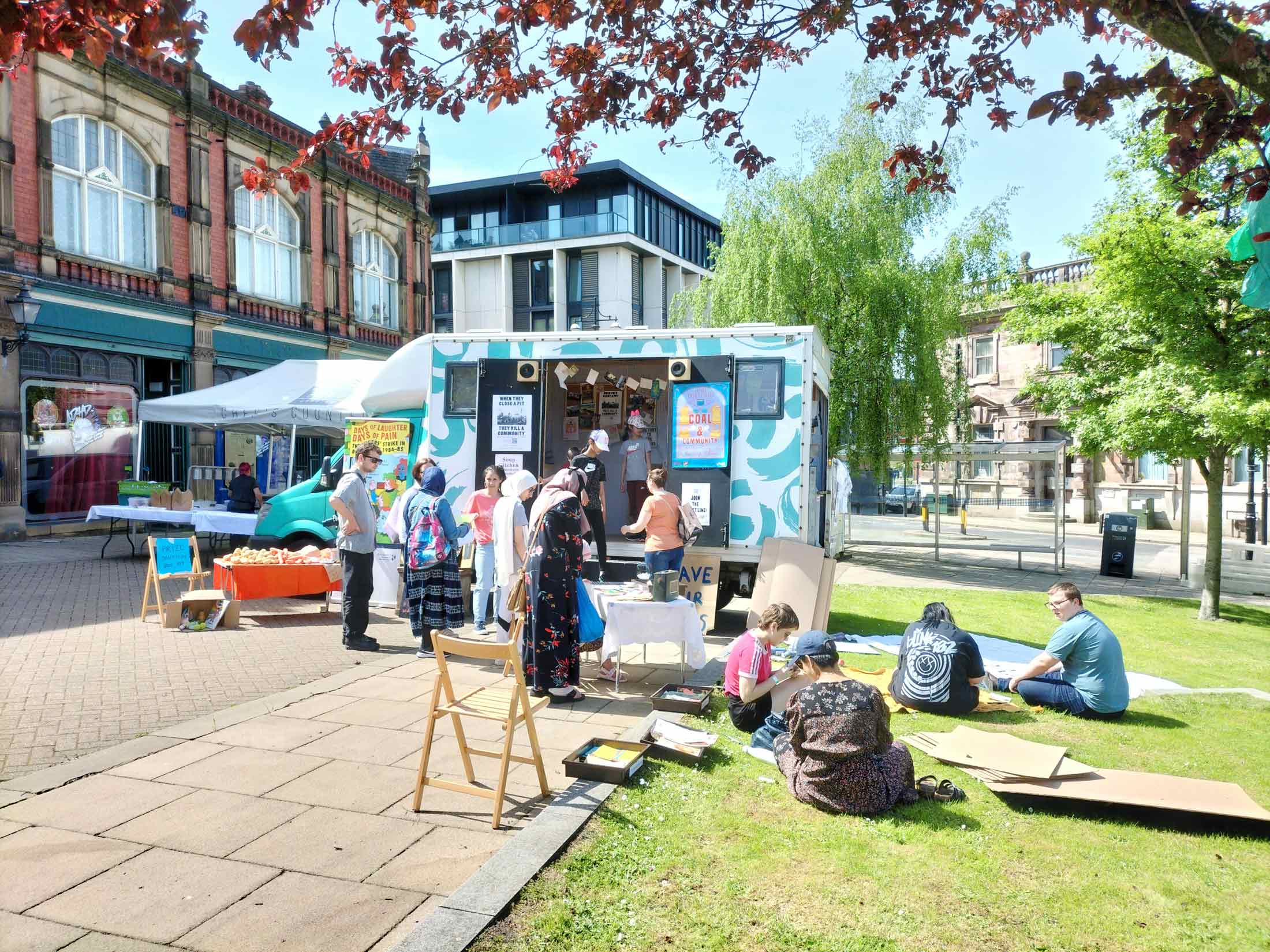
We are beyond excited to share the incredible news that Chol has been awarded a WYCA Unlimited Micro Capital Grant to enhance the accessibility and inclusivity of the Cholavan!
Developed in collaboration with the Children's Capital of Culture, the free one day event will fill the Civic with workshops,…